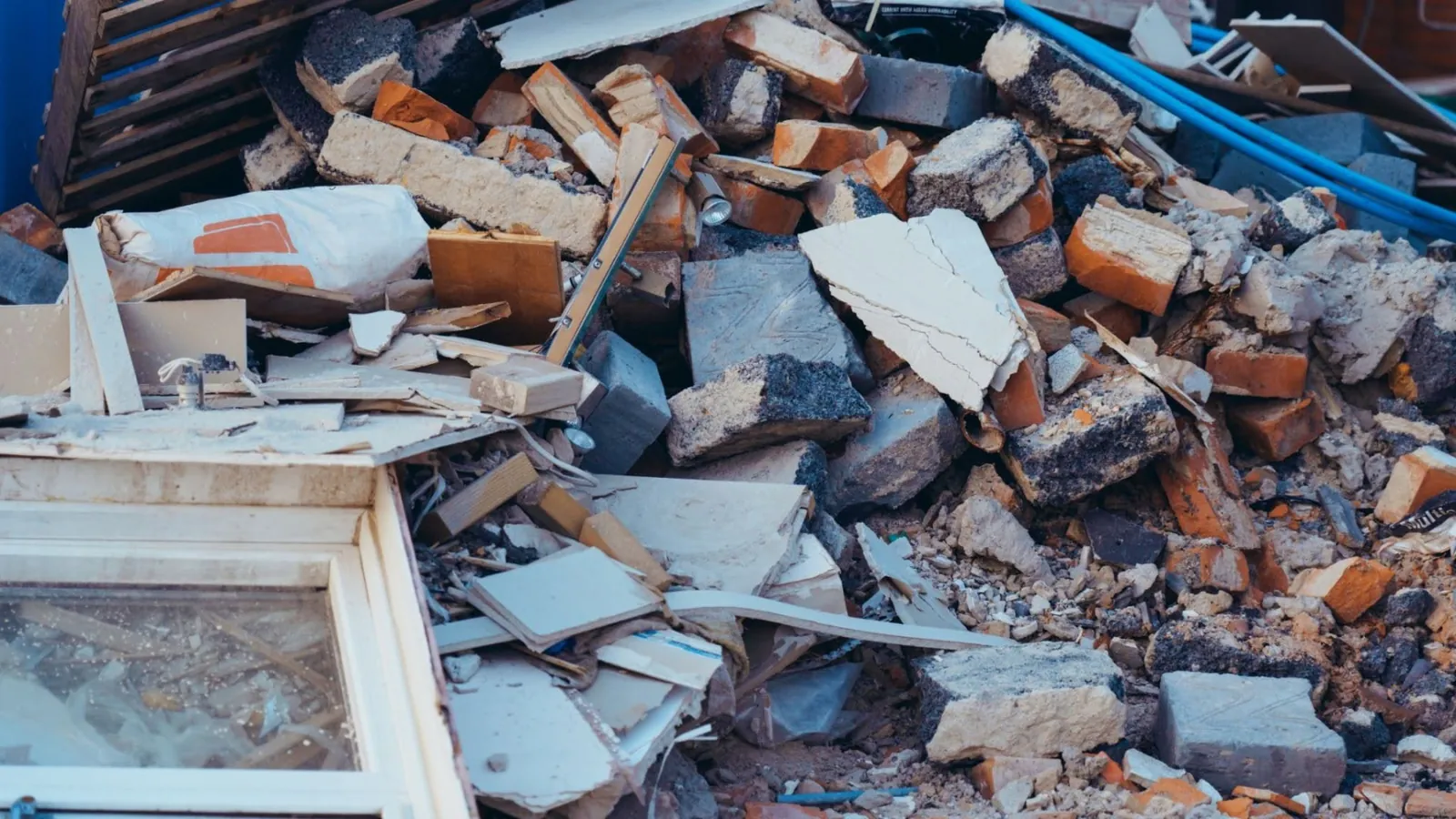
Construction debris can't just go in a regular dumpster or curbside container in either city — it's covered by its own recycling requirement, separate from general junk. Both Fresno and Clovis require a share of construction and demolition debris to be diverted from the landfill on permitted projects, though the two cities apply that rule a little differently.
This post covers how each city's diversion requirement works and where a construction debris removal service fits into staying compliant without tracking it all yourself.
Fresno Ties Its Rule to Permit Size
As covered in our dumpster rental guide, Fresno requires construction and demolition debris to be recycled for any permitted project generating at least 8 cubic yards of material, with that debris hauled to a city-approved disposal facility rather than a standard landfill. It's a permit-triggered requirement — smaller jobs without that threshold generally fall outside it.
Clovis Sets a Flat Diversion Percentage
Clovis takes a different approach. Under its Recycling and Diversion of Construction and Demolition Debris ordinance, at least 50 percent of the waste tonnage from a covered project must be diverted from disposal, regardless of the specific volume threshold that triggers Fresno's rule. Covered projects are handled through the city's nonexclusive C&D debris collection franchise, meaning multiple authorized haulers can provide the service rather than one exclusive contractor.
Both cities' rules trace back to the same source: California's Integrated Waste Management Act, which requires local jurisdictions to divert a share of solid waste from landfills. Fresno and Clovis have simply built their own local ordinances around that state requirement in slightly different ways.
What This Means for Documentation
Whichever city a project is in, diversion isn't just a hauling decision — it usually comes with a paperwork requirement. Fresno expects debris routed to an approved facility; Clovis's covered projects go through its franchise system with reporting tied to the ordinance. Keeping that documentation straight matters if the project needs final sign-off tied to a permit.
When a Construction Debris Removal Service Helps
Sorting mixed construction debris, tracking which materials count toward a diversion requirement, and routing everything to a facility that actually qualifies is a lot to manage alongside the project itself. A removal service that already works within both cities' systems takes that off the project's plate.
Know Where the Debris Is Actually Going
Construction debris in Fresno and Clovis isn't just hauled away — it's tracked against a diversion requirement that traces back to state law, whether that's Fresno's permit-size trigger or Clovis's flat 50 percent threshold.
Book online and enjoy a cleaner, stress-free space.